Principal AI Engineer / AI ArchitectStuttgart, Germany

Intelligence.
Engineered.

I turn AI research into systems that work — from custom decision models and neural audio codecs to agents with the right context.

APPLIED INTELLIGENCEFIG. 001
S101 / COMPLEX INPUT02 / DECISION03 / USEFUL SIGNALDATA · TOKENS · CONTEXTSELECT · COMPRESS · ACT

Fast decisions.
Less unnecessary computation.

S/1
RESEARCH → PROTOTYPE → REAL-WORLD SYSTEM↓
01Efficient models02Agent systems03Multimodal experiences

Selected work11

Experiments, trained models and working systems.

Showing 11 / 11
01 / AUDIO · EDGE INFERENCE
MP3 / 320 kbit/s5.35MBSAGE / 10.3 kbit/s172.5KBOne track. Two representations.133.6 s · AAOS / Tensor G2 · payload only
Neural audio codecs

Less bandwidth. More engineering.

SpectroStream and SAGE neural audio decoding on Android, from initial Exynos experiments to documented AAOS / Tensor G2 tests. The project connects token containers and C++ reconstruction with a Flutter player, network profiles, thread controls and startup measurements. The study tests where compression savings meet CPU, memory and playback constraints. On the documented AAOS / Tensor G2 setup, SAGE r128 reduces a 133.6-second track from 5.35 MB (MP3) to 172.5 KB, with a measured decoding RTF of 0.46 at four threads.

5.35 MB → 172.5 KBOne track · AAOS / Tensor G2 · SAGE r128
C++ / Flutter / Kotlin / LiteRT
02 / AGENTS · CONTEXT ENGINEERINGCONCEPTUAL SYSTEM VIEW
S1PROJECT CONTEXTLOCAL SELECTIONMAIN AGENTRelevance → budget → selected files
DeepReplay

Give the agent the right context.

A DeepSeek Harness plugin that uses a System-1 model to rank project stages and files before assembling context for the coding agent. A local llama.cpp backend moves relevance decisions onto the user’s machine; a remote Liquid backend is also supported. Architecture navigation, context budgets, pins and prompt snapshots make the selection inspectable. Reworking task-solving iterations is the next research direction; the current implementation selects project context while preserving canonical chat history.

Local selection → focused contextWorking plugin · iteration control in development
TypeScript / React / Cordis / llama.cpp
03 / AUDIO · CUSTOM TRAINING
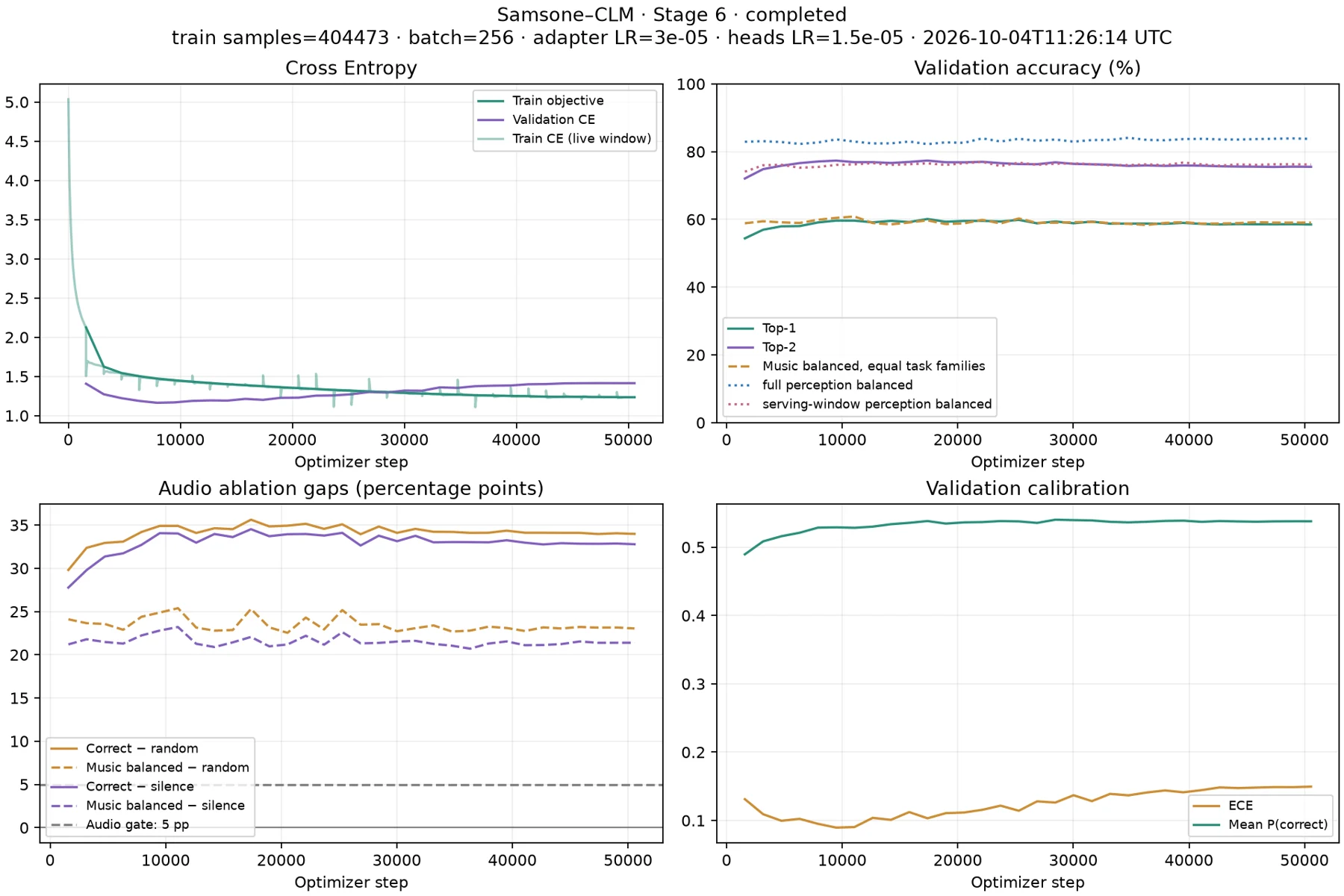
Actual training curves from the FMA Large genre experiment.
Audio CLM

Listen. Rank. Decide.

A non-generative System-1 audio model built on frozen Samsone-356M features, with our own trained adapter and CLM state/action heads. Instead of producing a free-form answer, it ranks candidate descriptions of a sound or piece of music — a route toward responsive radio and music understanding. The FMA Large continuation used 404,473 training QA examples and reached 42.41% balanced genre accuracy across 11 classes on 569 reserved-test recordings; unseen question wording remains a limitation.

42.41%11-class genre balanced accuracy · reserved test
Python / PyTorch / Samsone / CLM
04 / MULTIMODAL · CUSTOM TRAININGCONCEPTUAL SYSTEM VIEW
TEXTIMAGELFMText & vision → candidate rankingVISION HEADTEXT HEAD
LFM + CLM

Multimodal decisions, without generation.

Our trained CLM-style decision heads over a frozen LFM2.5-VL-450M backbone combine text and image understanding with candidate ranking. A modality router selects a text or vision specialist, while cached features avoid repeated work. The project compares head capacity, sampling and learning rates against raw embedding similarity. The selected visual model reached 62.71% accuracy on A-OKVQA validation, versus 36.94% without images; these are research measurements, not a general multimodal quality guarantee.

62.71%A-OKVQA validation · 1,145 examples
Python / PyTorch / Transformers / LFM
05 / ANDROID · ON-DEVICE AICONCEPTUAL SYSTEM VIEW
AUDIO → CLMMICROPHONEExecuTorchLocal inference
Samsone on Android

From trained weights to a phone.

An Android client that brings Samsone-356M and the trained audio System-1 heads into an on-device ExecuTorch runtime. Alongside chat, it provides a microphone listening mode and a dedicated CLM test screen with general and music scorers, presets and trackers. The work connects model research to a usable mobile experiment through hidden-state extraction, model exports and validation vectors; it is a prototype for testing local audio decisions.

On-deviceAudio capture · general & music ranking
Kotlin / C++ / JNI / ExecuTorch
06 / AGENTS · CODE INTELLIGENCE
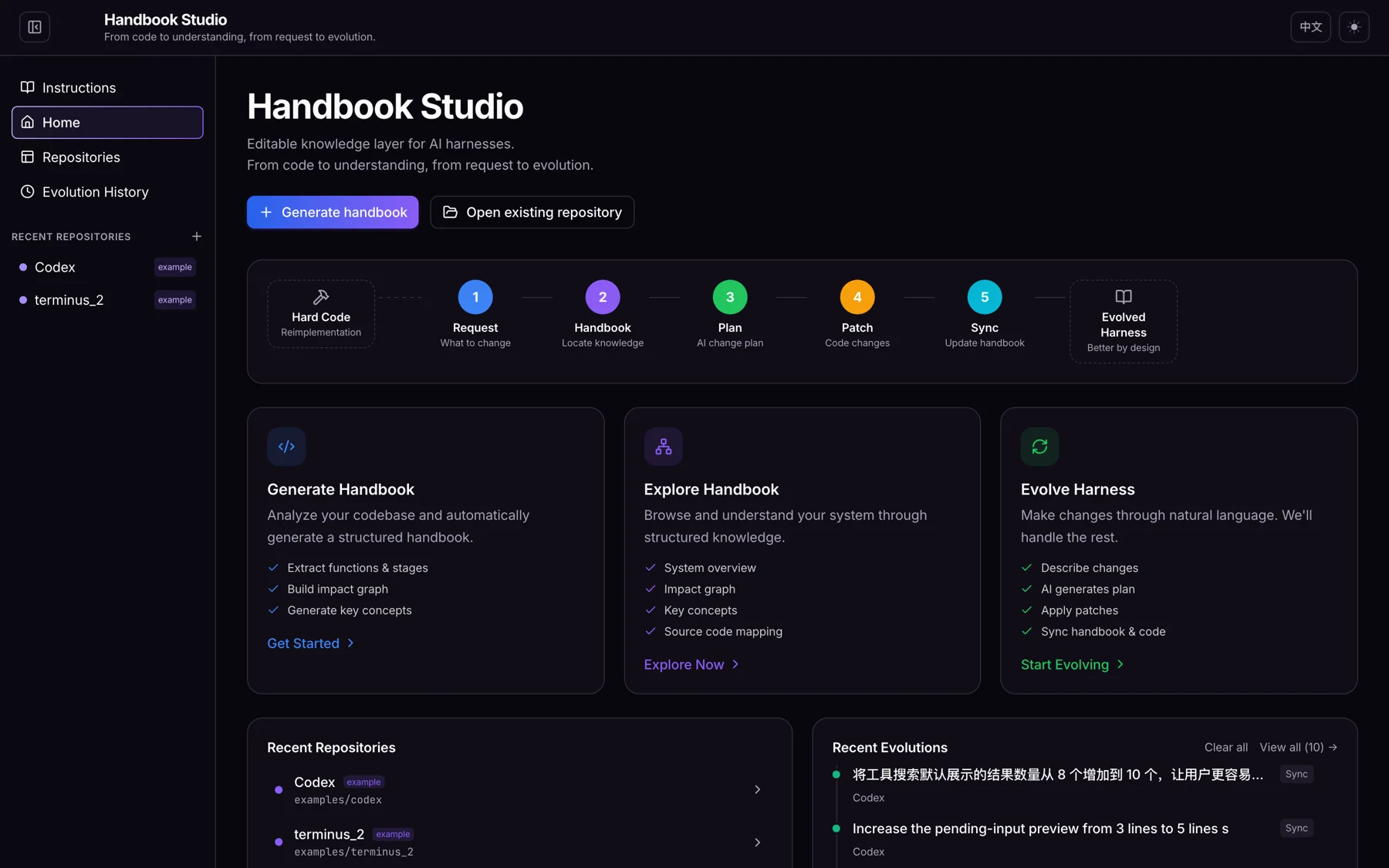
Handbook Studio screenshot from the upstream project, included in the fork; the contribution is in analysis and integration.
Harness Handbook

Make a codebase navigable.

An extension of Ruhan Wang’s Harness Handbook that turns source code into a structured map for coding agents. My fork adds Kotlin parsing and call resolution, project build-configuration analysis, configurable LLM endpoints and incremental updates with rollback and token accounting. The focus is broader language coverage and a more practical analysis workflow. Its generated handbooks also serve as the navigation layer consumed by DeepReplay.

Code → navigable knowledgeFork · language support & workflow improvements
Python / tree-sitter / Kotlin
07 / AGENTS · SPATIAL INTERFACESCONCEPTUAL SYSTEM VIEW
RESEARCH ARESEARCH BREVIEWERContext becomes an explicit connectionSHAREASK
drawCo / Research Canvas

Chats that work together.

A spatial canvas for DeepSeek Harness where each node is a live agent session. Directed connections define how chats share context, pass complete context bundles or ask a neighbour for help. Topic extraction, reviewer nodes and a goal-driven orchestrator support research across several threads. The project explores an interface in which the relationships between conversations become explicit and controllable, rather than disappearing into a flat chat list.

Sessions → connected researchShare context · ask neighbours · review
TypeScript / React / XYFlow / DeepSeek Harness
08 / AGENTS · LEARNING SYSTEMSCONCEPTUAL SYSTEM VIEW
BOOKAGENTMEMORY & PROGRESS
bookWorker

The book sets the course. The agent stays with you.

A learning companion built around reading a real book and solving its exercises with an agent. The book supplies the curriculum; the agent uses the current page, conversation and persistent learner memory to support the work and track progress. The Flutter prototype brings together document context, image/OCR workflows, speech recognition and spoken responses. It explores a sustained tutoring relationship grounded in a chosen source, with the learner still doing the exercises.

Book + context + memoryReading · exercises · voice interaction
Dart / Flutter / Speech / Persistent memory
09 / EXPERIENCE · HACKATHON PROTOTYPE
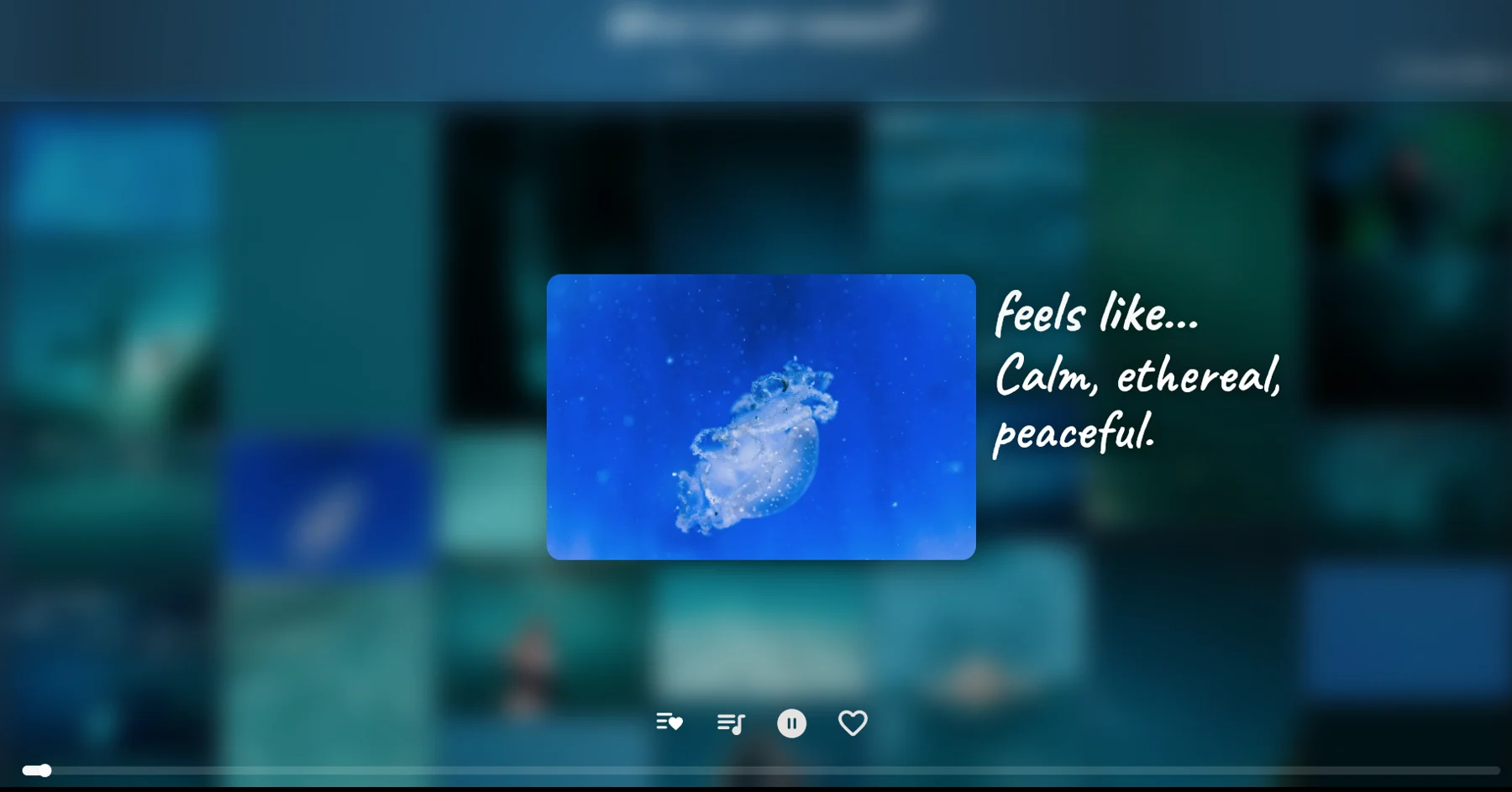
Saved screenshot of the Atmos player; an additional photo shows the automotive display demo.
Atmos

Find music through a feeling.

An immersive music-player prototype created during a hackathon to explore visual browsing and a light sense of synesthesia. Images become an entry point into mood and generated music, shifting discovery toward what a track feels like. The Flutter demo combines playback, playlists and favourites, and was demonstrated on an automotive display. It is an experiment in the relationship between visual atmosphere, musical content and interaction.

Image → mood → musicLive web demo · automotive display prototype
Dart / Flutter / just_audioOpen live demo ↗
10 / VISION · EMBEDDED SYSTEMS
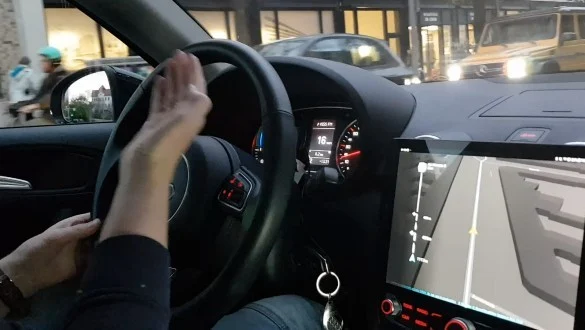
Owner-supplied photographs of gesture interaction in an automotive navigation prototype.
Gesture recognition

A gesture becomes an interface.

A custom-trained gesture-recognition system for automotive interaction, from data collection and model design to integration into navigation prototypes. Architectural and inference optimisations made the network practical on constrained NVIDIA hardware, reaching approximately 40 FPS on Jetson Nano in the project’s reported setup. The work connects computer vision with the demands of an embedded interface: responsive feedback, limited compute and real human movement.

≈40 FPSJetson Nano · project-reported measurement
Custom neural architecture / NVIDIA Jetson Nano
11 / AGENTS · GENERATIVE VIDEO
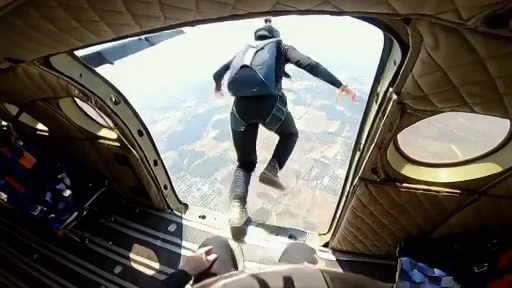
Actual generated frames from the Video Maker project, not screenshots of its interface.
Autonomous Video Maker

From a scenario to a video pipeline.

An autonomous Hermes agent environment that turns a user-authored scenario into a managed video-generation workflow. Scene and reference handling, prompt compilation, ComfyUI execution and Context Loop continuity connect the creative brief to the rendering tools. Persistent job progress, restart/resume tooling and thermal controls support long-running generation. The system automates production steps while retaining the user’s scene boundaries and story; the accompanying frames are generated output from the project.

Scenario → workflow → videoOrchestration · continuity · persistent progress
Python / Hermes / ComfyUI / Context Loop
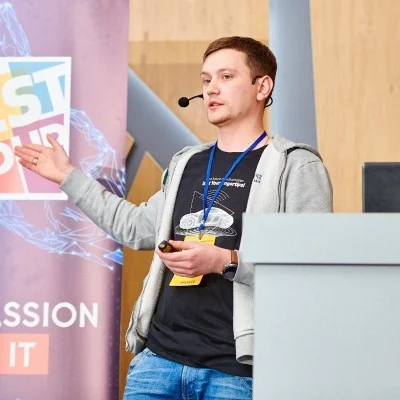
Artem Melnytskyi speaking at a technology eventArtem Melnytskyi
AI engineer · architect · researcher

Research-minded.
Engineering-driven.

I’m Artem Melnytskyi, an AI engineer and architect with 13+ years across software, embedded systems and automotive R&D. I design and train custom neural architectures, bring models onto real devices, and build the harnesses that help agents work with complex projects.

My background moves from physics and research to C++ systems and AI architecture. Today, my work connects model training, efficient inference and the experience people actually use.

Download CV↗
13+years in software & systems
2022 — NOWMercedes-BenzAI Specialist, Entertainment R&D
2016 — 2022LuxoftAI Solutions Architect / Team Leader
2015 — 2017E. O. Paton Electric Welding InstituteScientist · Kyiv, UkraineApplied machine learning to materials and structural diagnostics; researched neural-network models for predicting degradation in metal structures.
2013 — 2016BankomzvjazokEmbedded software engineering
2010 — 2014National Technical University of UkrainePhysics Teacher · Kyiv, UkraineDelivered physics lectures and practical classes.
2010National Pedagogical Dragomanov UniversityTechnician · Kyiv, UkraineSupported automated student assessment.

Research and teaching appointments overlapped with engineering roles.

Co-author of “Application of Machine Learning Technologies in Diagnostics” (2016).

Research notes

01
DELIVERY / QUALITY / RELEVANCEGENERATION → EVALUATION → EXPERIENCE
RESEARCH / AI ENTERTAINMENT8 MIN READ

GenAI entertainment needs more than generation.

Neural delivery, quality evaluation and contextual relevance: three engineering problems behind the new entertainment experience.

Read the article ↗

Let’s build
what comes next.

For conversations about applied AI, agent systems and efficient models.